
mail info@star-centre.org
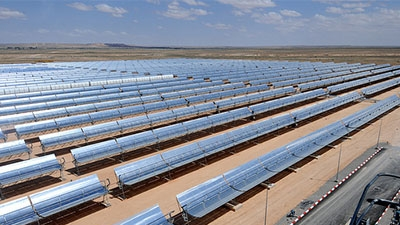
The South Tarawa Renewable Energy Project, supported by the Asian Development Bank (ADB), was launched in Kiribati to reduce reliance on imported diesel and improve energy access in the capital region. The project’s objective was to install grid-connected solar PV systems and battery storage to stabilize the local grid, lower electricity costs, and enhance climate resilience. It also included capacity building and institutional support to strengthen the country’s renewable energy governance.
Impact and Inference:
This initiative demonstrated how solar energy and storage solutions can transform energy systems in remote island contexts. It improved energy reliability, reduced emissions, and supported Kiribati’s climate adaptation goals. The project also highlighted the importance of integrating technical infrastructure with policy and institutional development for long-term sustainability.
Read more: 49450-021: South Tarawa Renewable Energy Project | Asian Development Bank
As a small island developing state with dispersed populations across remote atolls, Kiribati faces high fuel import costs and limited grid infrastructure. Its vulnerability to climate change and dependence on diesel generation make solar home systems a strategic fit. SHS can offer energy independence, reduce emissions, and improve resilience in a cost-effective manner.
The IDCOL Solar Home Systems (SHS) Program in Bangladesh was designed to tackle rural energy poverty by deploying solar home systems in off-grid regions. Its core objective was to provide clean, reliable electricity to underserved communities, reduce reliance on kerosene, and stimulate socio-economic development. The IDCOL Solar Home Systems (SHS) Program, launched in 2003, became the world’s largest off-grid electrification initiative, transforming rural energy access in Bangladesh. By 2018, the program had installed 4.13 million SHSs, providing clean electricity to nearly 20 million people and replacing kerosene lamps, which significantly reduced indoor air pollution and improved quality of life. The program aimed for 6 million systems, generating around 110 MW of renewable capacity and saving 250,000 tons of fossil fuel annually.
The financing mechanism was innovative and inclusive. With a total investment of approximately USD 1.1 billion, the program leveraged USD 683 million from development partners (including World Bank IDA credit and grants) and USD 412 million from households and private entities. IDCOL refinanced up to 70% of partner organization loans at concessional rates, while households paid a 15% down payment and financed the remainder through micro-credit at around 12% interest over three years. Grants and buy-down subsidies further reduced upfront costs, making systems affordable for low-income households. Implemented through 56 partner organizations, the program combined soft loans, grants, and microfinance to achieve scale and sustainability, serving as a global benchmark for decentralized renewable energy deployment.
Read more: Lessons from Bangladesh's SHS Program
As a dispersed island nation with fragile ecosystems and high vulnerability to climate change, Kiribati can benefit immensely from solar ferries. They offer a sustainable alternative to diesel boats, reduce environmental risks, and enhance resilience in remote communities with limited transport options.
The Solar Ferry Boats initiative in Bangladesh was developed to provide clean, affordable, and efficient water transport across rivers and coastal areas, particularly benefiting communities dependent on waterways for daily mobility. The objective was to reduce fuel costs, improve safety, and cut emissions by replacing diesel-powered boats with solar-powered alternatives. These ferries have proven effective in reducing operational costs, enhancing access to education and healthcare, and promoting sustainable livelihoods in remote regions.
Impact and Inference:
The initiative demonstrated how solar-powered transport can be a game-changer for low-income, water-reliant communities. It offers a replicable model for integrating renewable energy into public transport, especially in geographies where waterways are central to daily life. The program also underscores the potential of green infrastructure to support inclusive development and climate resilience.
Read more: Development of Solar PV-based Water Transportation.pdf
With its dispersed island geography and limited grid infrastructure, Kiribati faces high energy costs and logistical barriers. Off-grid solar systems offer a practical, climate-resilient solution to improve energy access, especially for remote households and public facilities
The Off-Grid Electricity Access Project (OGEAP) in Benin was launched to expand energy access in underserved rural communities through solar mini-grids and standalone solar systems. Its objective was to bridge the energy gap for households, schools, and health centers by leveraging private sector participation and concessional financing. The project successfully demonstrated how decentralized renewable energy solutions can be scaled to meet basic electricity needs, improve public service delivery, and stimulate local economic activities.
Impact and Inference:
OGEAP highlighted the effectiveness of off-grid solar solutions in accelerating universal energy access, especially in regions where grid extension is economically unfeasible. It also underscored the importance of enabling policies, blended finance, and community engagement in ensuring long-term sustainability. The model is adaptable to other countries facing similar infrastructure and energy access challenges.
Read more: Enabling Off-Grid Energy Investment in Benin
Kiribati’s dispersed geography and vulnerability to sea-level rise make centralized grid systems impractical. Solar mini-grids offer a resilient, low-emission solution to meet basic energy needs and improve living standards in isolated atolls.
The GDS International Mini-Grids initiative in Benin focuses on deploying solar-powered mini-grids to electrify remote communities that are beyond the reach of national grids. The objective is to provide reliable, clean electricity for households, schools, health centers, and small businesses, thereby fostering inclusive development. By combining technical innovation with community engagement and private sector investment, the initiative has successfully improved energy access, reduced reliance on diesel, and stimulated local economies.
Impact and Inference:
This initiative illustrates how decentralized energy infrastructure can bridge the rural electrification gap in a cost-effective and sustainable manner. It highlights the importance of tailored energy solutions that match local demand profiles, and the role of mini-grids in enabling productive use of electricity, improving public services, and supporting climate goals. 3 MW decentralized solar mini-grids with productive use focus.
Read more: Innovative Rural Electrification Microgrid (Benin)
With dispersed island communities and high vulnerability to climate change, Kiribati can benefit from household-level solar systems to reduce diesel dependence, improve energy access, and enhance resilience in remote areas.
Félix Morffi’s Solar Home in Cuba is a grassroots example of individual-led renewable energy adoption. Morffi, a retired electrical engineer, installed solar panels on his home to generate electricity independently, showcasing the potential of decentralized solar solutions in a country with frequent grid outages and limited access to modern energy technologies. His initiative reflects the power of local innovation in overcoming energy challenges and promoting sustainability at the household level.
Impact and Inference:
This case illustrates how personal initiative and technical know-how can drive energy independence and resilience in resource-constrained environments. It highlights the role of small-scale solar in improving quality of life, reducing reliance on fossil fuels, and inspiring community-level replication. The model is particularly relevant for regions with unreliable grids and limited institutional support for renewables.
Read more: One Cuban Allies with the Sun for Sustainable Living - Havana Times
Kiribati faces freshwater scarcity due to saltwater intrusion and limited rainfall. Solar-powered pumping systems can help manage groundwater sustainably, reduce dependence on imported fuels, and support climate adaptation in remote island communities.
The Lowland Solar Water Pumping initiative, supported by USAID in Ethiopia, was designed to provide reliable and sustainable water access for pastoral and agro-pastoral communities in arid lowland regions. The objective was to replace diesel-powered pumps with solar-powered systems to improve water availability for livestock, irrigation, and domestic use. The initiative enhanced climate resilience, reduced fuel costs, and supported livelihoods in drought-prone areas, while also promoting community ownership and maintenance of solar infrastructure.
The project was part of a broader USD 50 million climate-resilient water program, with USD 45 million approved by the Green Climate Fund (GCF) in 2024 to scale solar water pumping in drought-prone regions. About 90% of GCF support was provided as grants, complemented by USAID technical assistance and Ethiopian government co-financing. This blended finance approach enabled community-led schemes and empowered marginalized groups, while reducing operational costs compared to diesel systems. The financing model also incorporated life-cycle cost analysis to ensure affordability and sustainability, creating a replicable framework for climate-resilient water services in Africa.
Impact and Inference:
This project demonstrated how solar-powered water systems can transform resource-scarce environments by ensuring consistent water supply, reducing environmental impact, and improving food and water security. It also highlighted the importance of integrating renewable energy with local development goals, especially in fragile ecosystems and conflict-sensitive regions.
Read more: Microsoft Word - Lowland WASH Activity Briefing Note Solar Success in Water Services final
With its dispersed geography and extreme vulnerability to climate change, Kiribati can benefit from modular solar microgrids to reduce diesel reliance, improve energy access, and enhance resilience in remote atolls.
$40M solar mini-grid rollout for remote islands. The Empowering Paradise initiative, led by Arizona State University (ASU) under the LEAPS (Laboratory for Energy And Power Solutions) program, was designed to bring resilient, solar-powered microgrid solutions to remote island communities in Fiji. The objective was to improve energy access, reduce diesel dependency, and enhance climate resilience through community-driven, modular solar systems. The initiative combined technical innovation with local capacity building, enabling sustainable energy transitions in vulnerable island ecosystems.
Impact and Inference:
This project demonstrated how academic partnerships and modular solar technologies can empower isolated communities with clean, reliable electricity. It emphasized the importance of co-designing energy systems with local stakeholders, ensuring long-term sustainability and ownership. The model is highly replicable in other island and off-grid contexts facing similar energy and climate challenges.
Read more: Empowering Paradise: Fiji’s Solar Revolution Lighting Up Remote Islands
Kiribati’s over 100 inhabited islands and dependence on imported diesel (which accounts for over 60% of electricity generation) make centralized energy systems impractical. Community solar can offer scalable, climate-resilient energy access, reducing costs and supporting the government’s goal of carbon neutrality by 2050.
The Hawai‘i Island Community Solar Project in the USA was launched to democratize access to renewable energy by enabling residents—especially renters and low-income households—to subscribe to shared solar installations. The objective was to reduce energy costs, promote equity in clean energy access, and support Hawai‘i’s goal of achieving 100% renewable electricity by 2045. The project leveraged community-based solar arrays and subscription models, allowing participants to receive credits on their electricity bills without installing rooftop systems.
The project’s impact has been notable: participants saw average savings of 10–15% on monthly electricity bills, and the initiative contributed to reducing carbon emissions by over 1,000 metric tons annually. It demonstrated that community solar can be a scalable solution for inclusive energy transition, especially in geographies with high solar potential but limited rooftop access. The inference is that policy-backed community solar models can bridge equity gaps in renewable energy adoption while supporting national decarbonization targets.
Read more: Community Based Renewable Energy - Hawai‘i State Energy Office
Kiribati’s low-lying geography and vulnerability to sea-level rise make land-based solar risky. Floating solar on protected lagoons offers a climate-resilient alternative, supporting energy access while preserving land for habitation and agriculture.
The Sungrow Solar Farm in Huainan, China is a pioneering 40 MW floating solar power plant built on a former coal mine lake. Featuring 166,000 solar panels, it was once the world’s largest floating solar array. The project not only generates clean energy for around 15,000 homes, but also symbolizes China’s transition from fossil fuels to renewables by repurposing degraded industrial land.
Read more: World’s Largest Floating Solar Station Floats Over Flooded Coal Pit in China
Kiribati faces severe freshwater scarcity due to saltwater intrusion and rising sea levels. Solar desalination offers a sustainable alternative to costly imported water, ensuring safe drinking water for over 120,000 residents across dispersed islands.
The Solar Desalination Systems initiative in Cape Verde addresses freshwater scarcity by using solar-powered desalination to convert seawater into potable water. Its objective is to provide sustainable drinking water solutions for island and coastal communities while reducing reliance on expensive diesel-powered desalination plants. The system integrates photovoltaic panels with reverse osmosis technology, ensuring low operational costs and minimal carbon footprint.
The impact has been significant: Cape Verde’s solar desalination plants produce up to 1,500 m³ of fresh water daily, reducing fuel imports and cutting CO₂ emissions by over 1,000 tons annually. This approach has improved water security for thousands of residents and demonstrated that renewable-powered desalination can be a viable solution for climate-vulnerable regions. The key inference is that solar desalination systems can simultaneously tackle water scarcity and energy sustainability challenges in areas with abundant solar resources.
Read more: FuturaSun in Cape Verde: clean energy for clean water